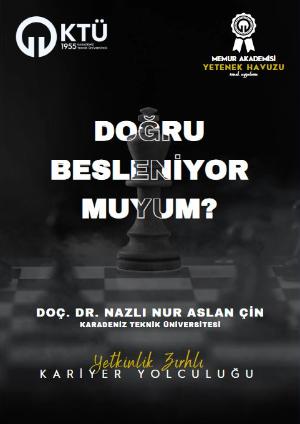
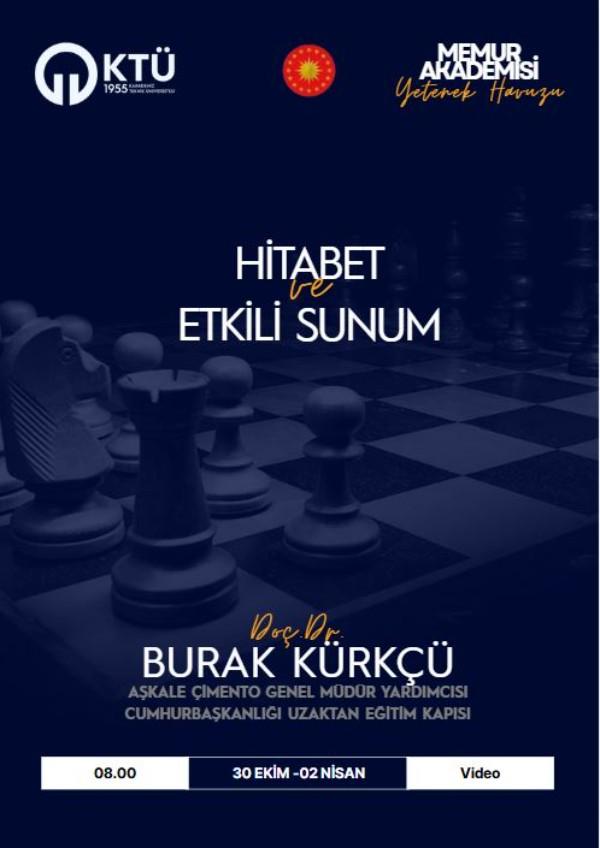
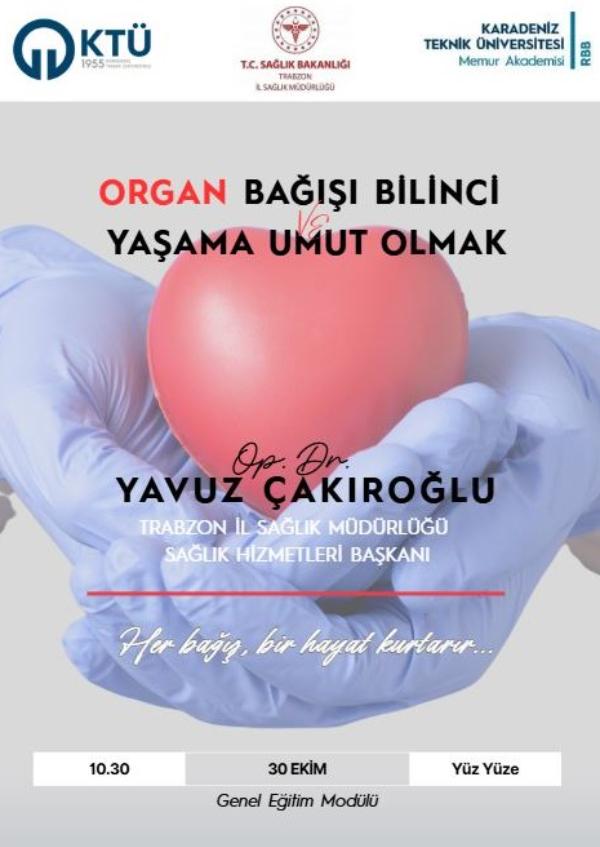
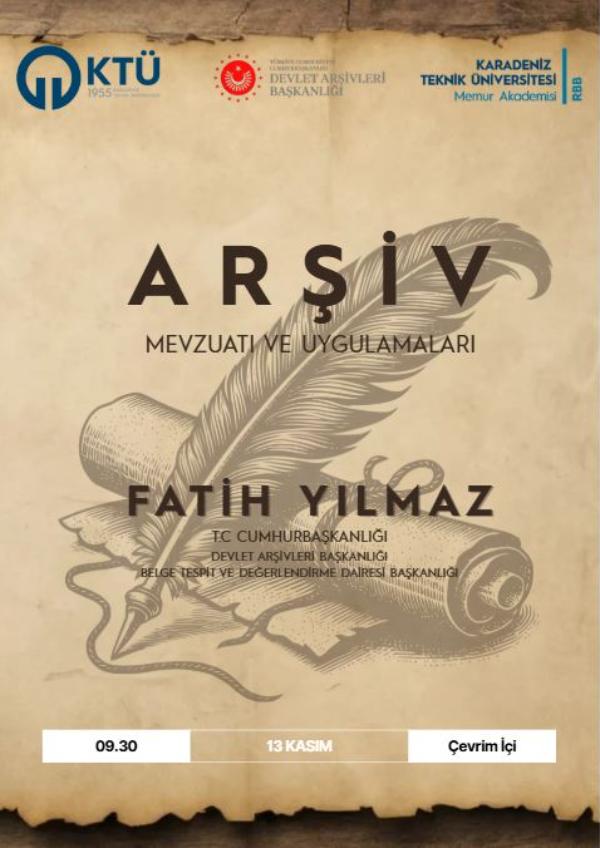
Our University organised a wide range of short-term vocational training courses, certificate programmes, technical training activities, and professional development opportunities in 2025 for individuals who were not enrolled in a formal degree programme at the University, including employees, managers, members of different professional groups, public- and private-sector personnel, researchers, and industry representatives. These activities were primarily delivered through the Continuing Education Application and Research Centre (KTÜ-SEM), with additional contributions from the Technology Transfer Application and Research Centre (KTÜ TTM), the Good Medical Practice and Medical Simulation Centre (MEDSİM), and other academic and applied units of our University.
Our University’s institutional sustainability framework clearly states that KTÜ-SEM supports lifelong learning by opening the University’s educational opportunities to all segments of society. The same institutional statement indicates that KTÜ-SEM organises certified professional development programmes, technical training courses, and personal development workshops for both internal and external participants, while also developing tailored training solutions in cooperation with public institutions, the private sector, and civil society organisations. The provision of online and face-to-face training in contemporary areas such as digital literacy, entrepreneurship, artificial intelligence, and foreign languages also forms part of the Centre’s institutional approach to lifelong learning.
Evidence:
https://www.ktu.edu.tr/sem
The actual implementation of this approach in 2025 is also directly confirmed by our University’s institutional performance data. In the 2025 First Six-Month Strategic Plan Monitoring Results, Performance Indicator PG 4.1.2 is defined as the “number of external participants in certification training programmes organised by University units such as SEM, UZEM and the School of Foreign Languages.” While the 2025 target for this indicator was 200 participants, 220 external participants had already been reached within the first six months of the year, resulting in 100% performance achievement. This demonstrates not only that participation in vocational and certificate training by individuals from outside the University is possible, but also that such participation is institutionally measured and monitored as a strategic performance indicator.
Evidence:
https://www.ktu.edu.tr/dosyalar/yonetim_y7lmj.pdf
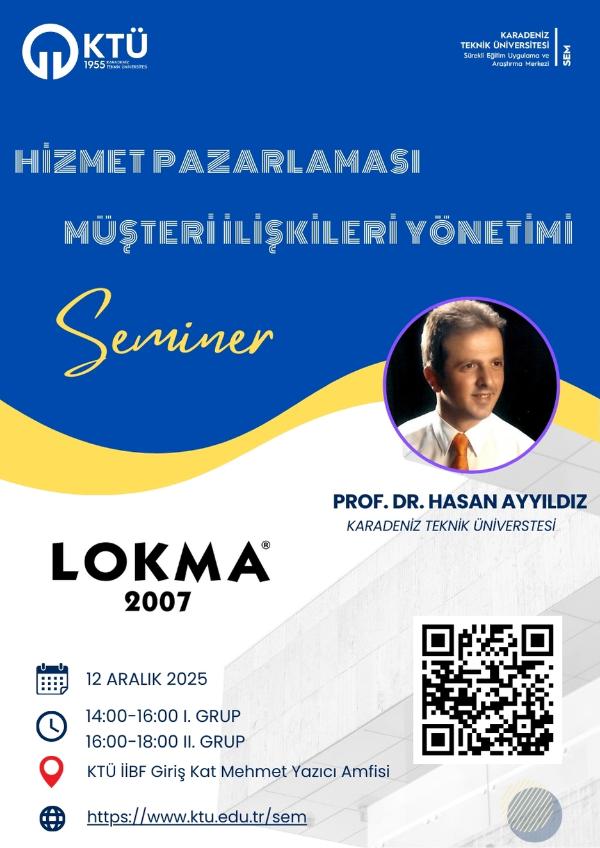
Even more importantly, our University’s 2025 Lifelong Learning Services data report both the training programmes delivered and the number of participants from outside KTÜ on a programme-by-programme basis. Institutional records show that 127 external participants attended the Basic Expert Witness Training, 82 attended Basic First Aid Training, 80 attended Effective Communication Skills Training, 64 attended Service Marketing and Customer Relationship Management Training, 56 attended ISO 9001 Quality Management System Information Training, 50 attended “Becoming an Entrepreneur in the Software World,” 32 attended Basic Service and Table Setting Techniques Training, and 28 attended Official Correspondence Techniques Training. The same institutional table also includes vocational and professional development programmes such as Preliminary Accounting Training, Leadership and Management, Presentation Techniques, and Optimisation Techniques in Production. These figures provide direct institutional evidence that a substantial proportion of our University’s lifelong learning activities reached people from outside the University in 2025.
Evidence:
https://www.ktu.edu.tr/dosyalar/yonetim_hE80s.pdf
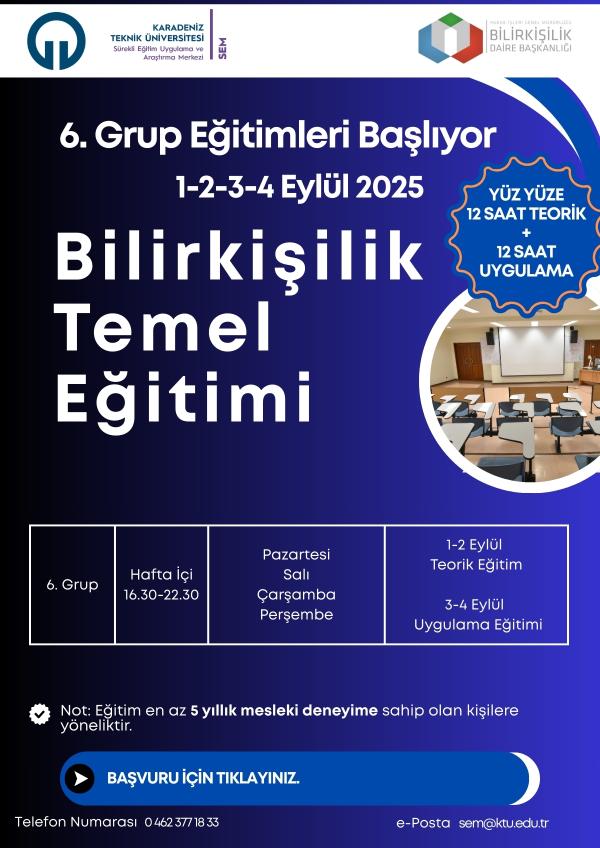
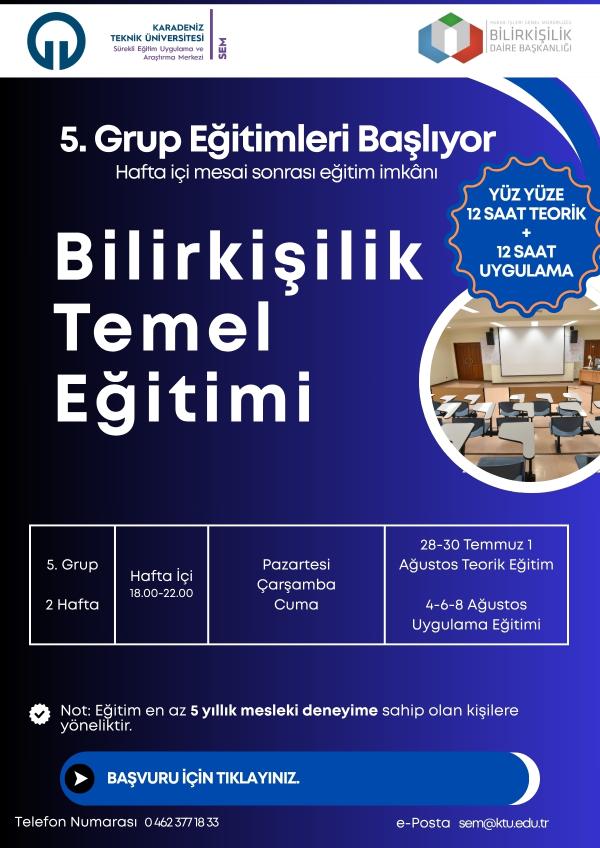
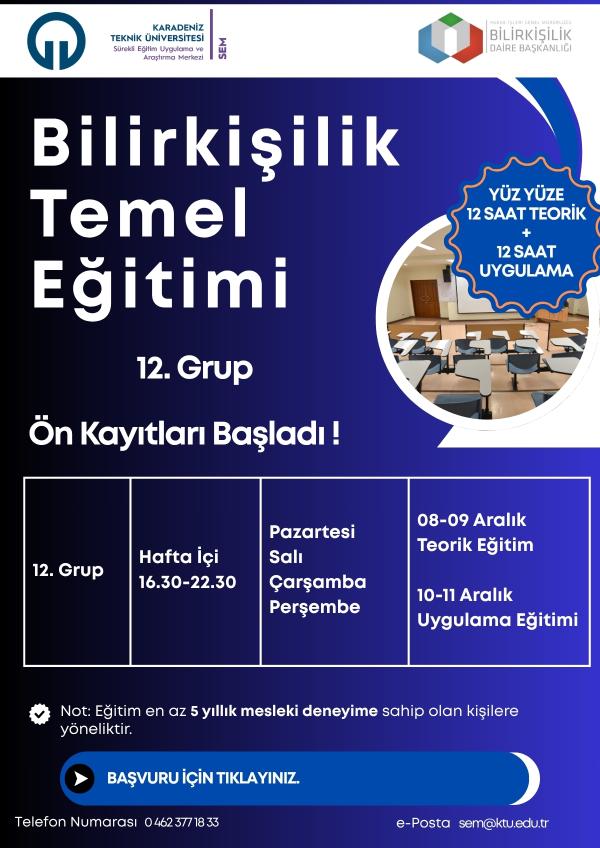
One of the strongest vocational training examples in 2025 was the Basic Expert Witness Training Programme. Following its application to the Ministry of Justice Directorate General for Legal Affairs and the Department of Expert Witnessing, KTÜ-SEM became an authorised institution for providing Basic Expert Witness Training in 2025. The programme was designed for professionals wishing to work as expert witnesses and consisted of 24 hours of training delivered over four days, combining theoretical and practical components. Applicants were required to have at least five years of professional experience, and participants who successfully completed the programme received a certificate that could be used in expert-witness applications. These characteristics clearly demonstrate that the programme was a professional qualification course aimed directly at working professionals outside formal university education.
The training was not limited to a single cohort in 2025; successive groups were organised during July–August, September, and October. KTÜ-SEM’s institutional announcements reported that the 5th, 6th, 7th, and 8th groups successfully completed the training and received their certificates. In addition, our University’s 2025 lifelong learning statistics recorded 127 participants from outside KTÜ in the Basic Expert Witness Training Programme. This makes the programme one of the most direct examples of the short-term vocational training model for people who are not university students, as defined by this indicator.
Evidence:
https://www.ktu.edu.tr/sem/haber/ktu-sem-bilirkisilik-temel-egitimi-vermeye-yetkili-kurum-oldu
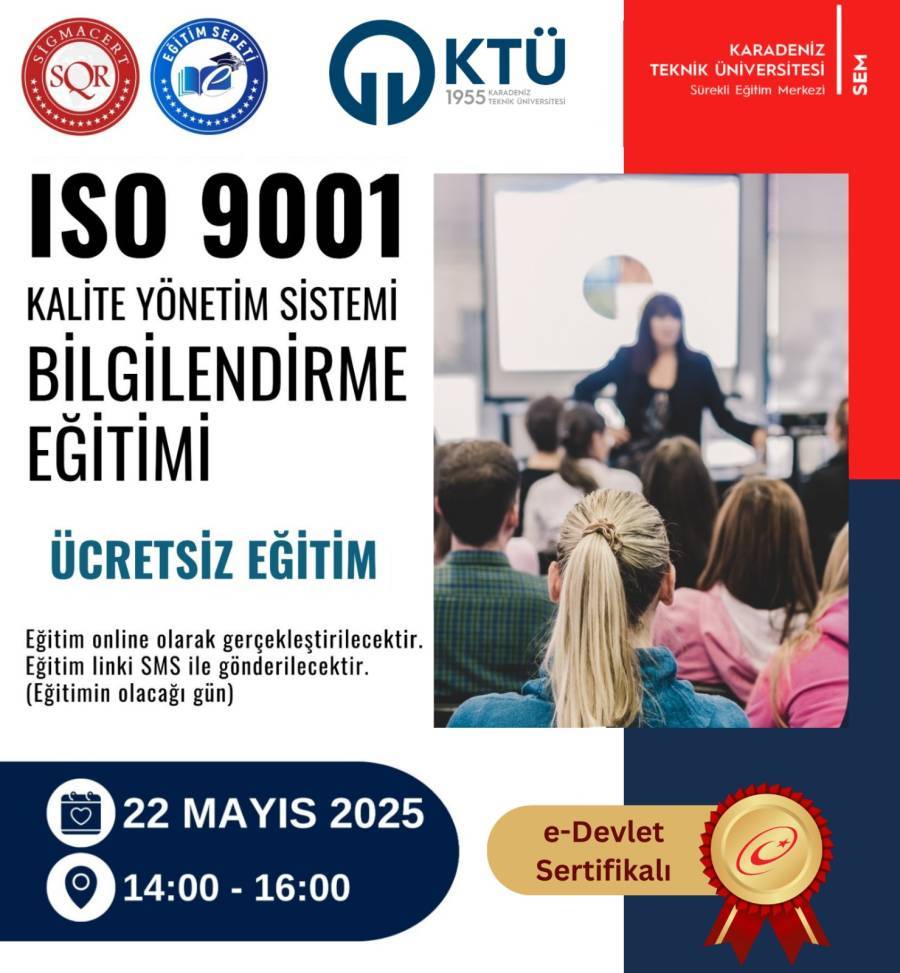
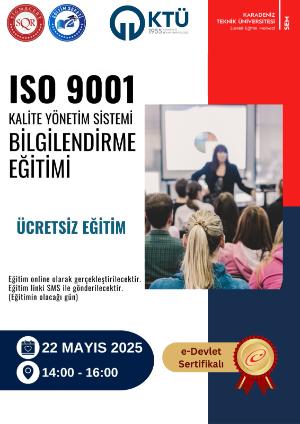
Another strong example was the ISO 9001 Quality Management System Information Training. Organised by KTÜ-SEM on 22 May 2025, the programme was delivered free of charge and online and was announced as providing an e-Government-certified certificate. The training enabled individuals wishing to improve their professional knowledge and competencies in quality management systems to benefit from a short-term professional development opportunity without enrolling in a formal university degree programme. According to our University’s institutional 2025 data, 56 participants from outside KTÜ attended this programme.
Evidence:
https://www.ktu.edu.tr/sem/iso-9001-kalite-yonetim-sistemi-bilgilendirme-egitimi
Similarly, Official Correspondence Techniques Training was offered by KTÜ-SEM in 2025 as a free online programme. In the University’s announcement dated 4 June 2025, the training was explicitly described as free, participation was available through pre-registration, and the programme was scheduled for 11 June 2025. This programme represents another concrete example of short-term professional development training for individuals working in the public or private sector, or for those wishing to improve their competence in official correspondence. Institutional lifelong learning data reported 28 participants from outside KTÜ for this programme.
Evidence:
https://www.ktu.edu.tr/sem/duyuru/resmi-yazisma-teknikleri-egitimi-ertelendi
Our University also implemented more comprehensive programmes in 2025 that directly supported vocational skills development and employment. In cooperation with the Trabzon Chamber of Commerce and Industry (TTSO), KTÜ, and the Trabzon Provincial Directorate of İŞKUR, a Preliminary Accounting Staff Vocational Training Course was established. The programme was implemented within the framework of the “Model Cooperation Protocol for Vocational Training Courses for the Development of Qualified Labour through Universities” and was designed with a 60% employment guarantee. Participants were scheduled to receive a total of 576 hours of training, consisting of 429 hours of theoretical instruction and 147 hours of practical training. The programme was directly aimed at training qualified preliminary accounting personnel in line with labour-market needs. With these characteristics, it directly meets the definition of vocational training under this indicator.
The practical component of the programme was also supported through the use of University infrastructure. Participants received hands-on training at the KTÜ Faculty of Medicine Medical Simulation Laboratory on basic life support, first aid for bleeding and injuries, response to choking, and emergency management. The programme therefore went beyond accounting knowledge and included complementary occupational skills relevant to the workplace.
Evidence:
https://www.ktu.edu.tr/isletme/duyuru/ttso-iskur-ktu-isbirligiyle-on-muhasebe-elemani-yetistirilecek
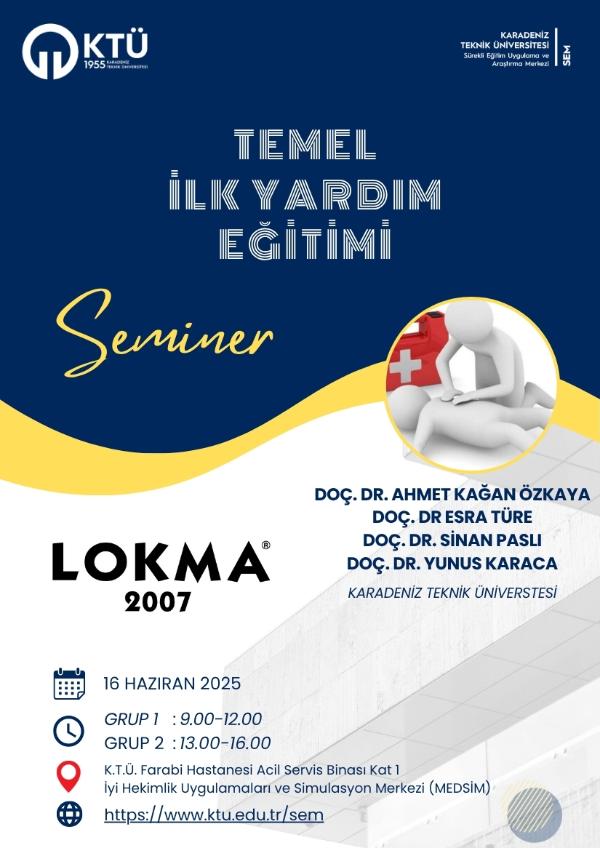
Our University’s vocational training activities also included skills development for employees already working in private-sector organisations. For example, on 16 June 2025, Basic First Aid Training was provided to Lokma Tatlı employees under the coordination of KTÜ-SEM and delivered by MEDSİM. Conducted in two separate groups, the training covered basic life support, intervention in choking cases, first aid for bleeding and injuries, shock management, and approaches to disorders of consciousness through both theoretical and practical instruction. The use of realistic simulation techniques demonstrates how our University made its educational capacity available to external stakeholders in order to improve the occupational competencies of private-sector employees.
Evidence:
https://www.ktu.edu.tr/sem/haber/lokma-tatli-calisanlarina-temel-ilk-yardim-egitimi-verildi
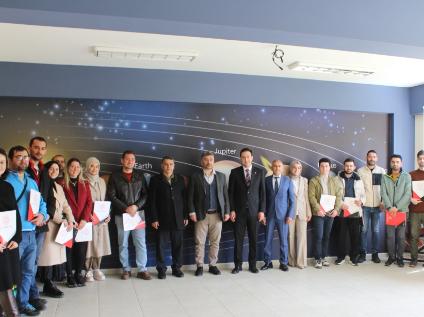
Our University also organised train-the-trainer activities for employees of public institutions. The Basic Astronomy Trainer Training Programme, financed by the Eastern Black Sea Development Agency and delivered by KTÜ-SEM on 16–18 April 2025, was attended by 15 teachers from different subject areas. In addition to astronomy and observation techniques, the programme included theoretical and practical teaching activities designed to enable participants to transfer this knowledge into their own educational environments. This programme demonstrates that our University also provides short, expertise-based professional development training for public-sector employees.
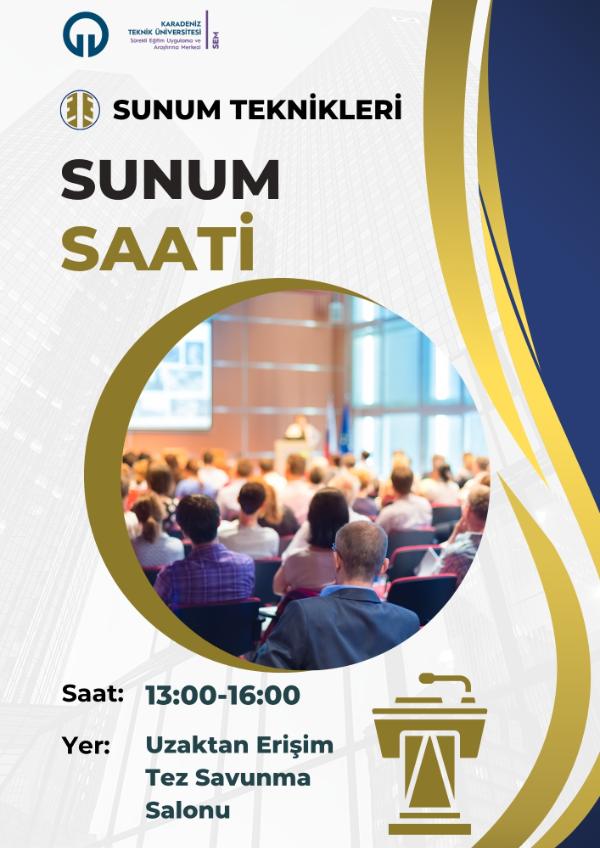
In addition to these examples, a wide range of short-term training and professional development programmes were offered in 2025, including Optimisation Techniques in Production, Lean Production and Optimisation, Service Marketing and Customer Relationship Management, Effective Communication Skills, Leadership and Management, Presentation Techniques, Statistical Data Analysis in Health Sciences, Artificial Intelligence Awareness Training, and Basic Service and Table Setting Techniques. KTÜ-SEM’s 2025 activity records demonstrate that the University offered a broad portfolio of professional training covering technical production skills, management, quality, communication, digital competencies, and service-sector skills.
In conclusion, our University did not limit vocational and professional education in 2025 to formal degree programmes for its own students. Instead, it provided short-term training, certificate programmes, professional development activities, and vocational skills programmes for individuals outside the University, including working professionals, job seekers, teachers, researchers, public-sector employees, and private-sector and industry representatives. The programme-level recording of external participation, the monitoring of participation in certification programmes as a strategic performance indicator, the Basic Expert Witness Training as a professional qualification programme, the free and certified ISO 9001 and Official Correspondence Techniques courses, the employment-oriented Preliminary Accounting Vocational Training Programme, and other professional training activities collectively demonstrate that the University systematically provides vocational and executive/professional education opportunities for people who are not enrolled in formal University programmes.