In 2025, Karadeniz Technical University expanded its campus-wide water recycling program by integrating rainwater harvesting, greywater reuse, filtration, storage, pumping, and dedicated non-potable water distribution systems.
Collection and Storage
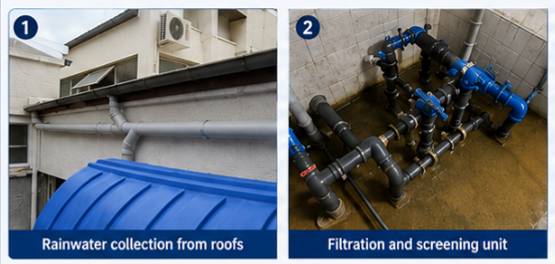
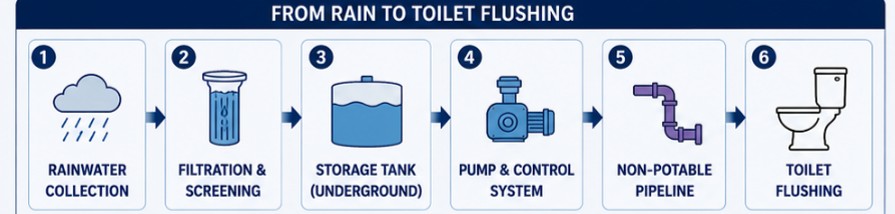
Rainwater runoff from building roofs, gutters, paved areas, and other impermeable surfaces is collected through drainage lines. The collected water is screened, filtered, and stored in dedicated tanks before reuse.
Non-Potable Water Distribution
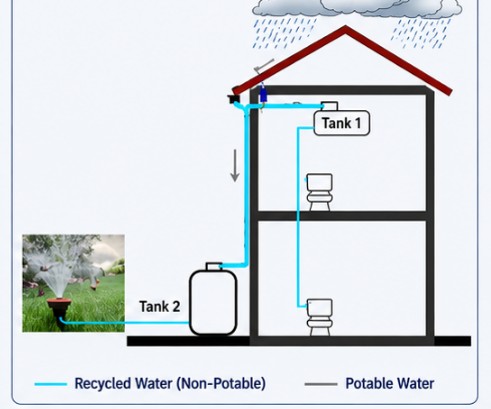
Pump and control systems transfer recycled water through pipelines physically separated from the potable water network. Backflow prevention devices, isolation valves, system labeling, and periodic maintenance ensure safe operation.
Toilet Flushing
Recycled rainwater is supplied to toilet cisterns in selected campus buildings, directly reducing the consumption of treated municipal water for sanitary applications.
Landscape Irrigation
Recovered water is used for irrigation and maintenance of lawns, planted areas, and green corridors. This practice supports campus vegetation while reducing potable water demand.
Vehicle Washing and Technical Use
Filtered recycled water is also used for washing university service vehicles, technical cleaning, and other utility applications that do not require drinking-water quality.
Monitoring and Water Quality
Tank levels, pump operation, transfer routes, overflow conditions, and maintenance requirements are regularly monitored. Screening, tank cleaning, filtration, and disinfection procedures support operational hygiene and system reliability.
Water Recycling Performance
In 2025, approximately 84.3 metric tons of recycled water were used from a monitored total water consumption of 635.35 metric tons. This corresponds to a water recycling rate of approximately 13.2%.
KTÜ’s water recycling program reduces potable water consumption by converting harvested rainwater and greywater into a functional non-potable resource for toilet flushing, irrigation, vehicle washing, cleaning, and campus maintenance.